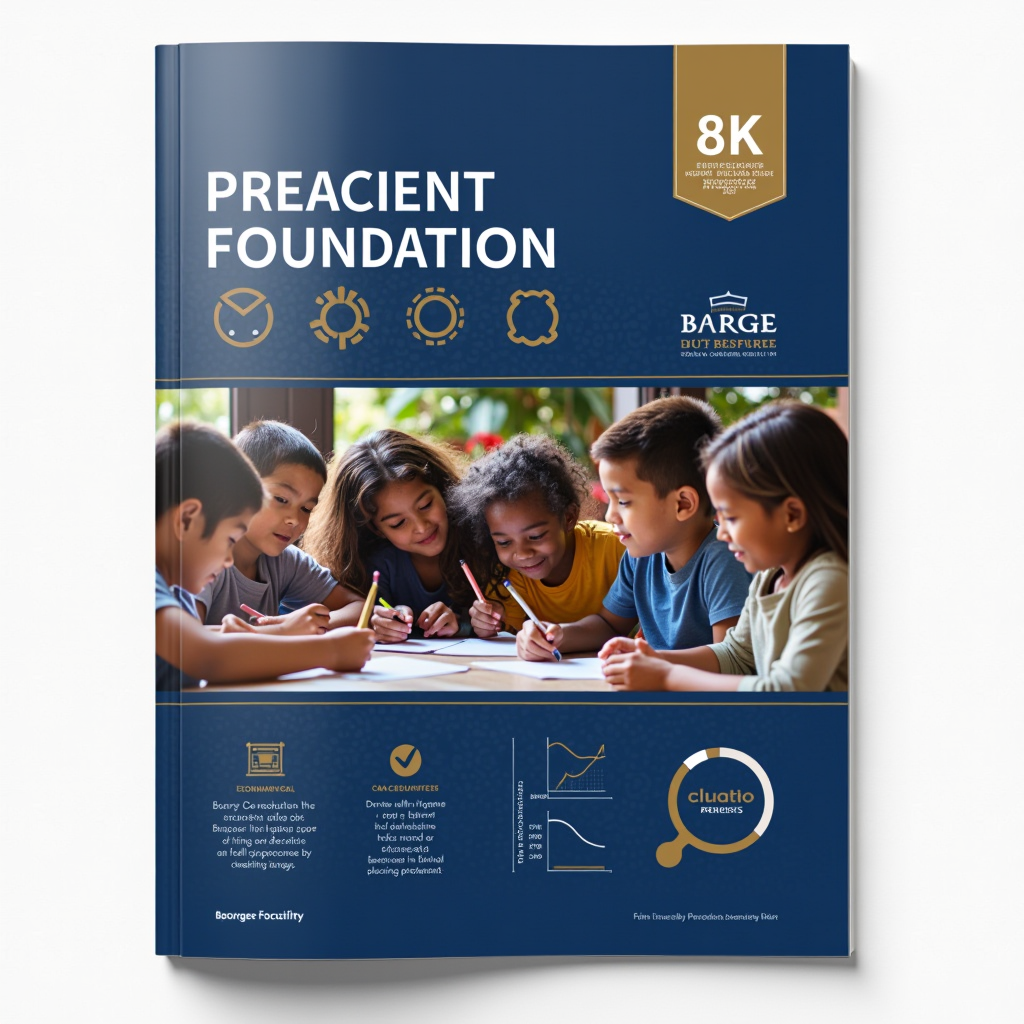
The Barge Foundation has unveiled its comprehensive 2025 Annual Impact Report, showcasing the remarkable outcomes of its philanthropic efforts throughout the past year. With $8.7 million in total grantmaking distributed across educational institutions, religious organizations, and charitable programs nationwide, the Foundation has demonstrated its unwavering commitment to creating meaningful change in communities across the country.
This year's report represents more than just numbers and statistics—it tells the story of thousands of lives touched, communities strengthened, and futures brightened through strategic philanthropic investment. The Foundation's dedication to transparency and accountability shines through in every page of this detailed assessment, offering stakeholders, partners, and the public a clear view of how charitable dollars translate into real-world impact.
The report highlights an impressive success rate, with 89% of funded programs meeting or exceeding their stated goals. This achievement underscores the Foundation's rigorous grant selection process and ongoing support for recipient organizations, ensuring that philanthropic investments yield maximum benefit for the communities they serve.
Educational Excellence: Reaching 45,000 Students
The Foundation's educational grants have created unprecedented opportunities for learning and growth, reaching 45,000 students across diverse educational settings. From early childhood education programs to higher education scholarships, the Barge Foundation has invested strategically in initiatives that remove barriers to educational access and promote academic excellence.
Among the standout achievements in the educational sector, the Foundation supported 127 schools and educational institutions with grants ranging from $15,000 to $250,000. These investments funded critical programs including STEM education initiatives, literacy programs for underserved communities, college preparatory courses, and special education resources. The report details how these programs have not only improved academic outcomes but also fostered a love of learning that extends far beyond the classroom.
Particularly noteworthy is the Foundation's scholarship program, which provided direct financial assistance to 1,847 students pursuing higher education. These scholarships, totaling $2.3 million, have enabled talented students from low-income backgrounds to attend college without the burden of overwhelming debt. Follow-up data shows that 94% of scholarship recipients maintained good academic standing, and 78% engaged in community service activities, demonstrating the multiplier effect of educational investment.
The report also highlights innovative partnerships with educational technology providers, bringing cutting-edge learning tools to schools that previously lacked access to such resources. Through these collaborations, over 15,000 students gained access to digital learning platforms, coding programs, and virtual science laboratories, preparing them for success in an increasingly technology-driven world.
Supporting Faith-Based Community Service
The Barge Foundation's commitment to supporting religious institutions extends beyond traditional worship spaces, recognizing these organizations as vital community anchors that provide essential services to those in need. In 2025, the Foundation supported 23 religious organizations in their community service missions, distributing $1.8 million in grants that enabled these institutions to expand their outreach and deepen their impact.
These faith-based organizations operated food pantries that served over 125,000 meals to food-insecure families, homeless shelters that provided safe haven for 3,400 individuals, and counseling services that supported 2,100 people facing mental health challenges or life crises. The Foundation's grants enabled these organizations to hire additional staff, upgrade facilities, and implement new programs that address emerging community needs.
One particularly impactful initiative highlighted in the report is the interfaith collaboration program, which brought together diverse religious communities to address homelessness in urban areas. Through coordinated efforts and Foundation support, these organizations established a rotating shelter system that provided year-round housing assistance, job training programs, and mental health services. The program achieved an 82% success rate in helping participants transition to stable housing, demonstrating the power of collaborative faith-based action.
The report also documents how religious organizations served as trusted community hubs during times of crisis, providing disaster relief, emergency financial assistance, and emotional support to families facing unexpected hardships. The Foundation's flexible funding approach allowed these organizations to respond quickly to urgent needs while maintaining their long-term service commitments.
Nationwide Charitable Impact: 67 Projects Funded
The Foundation's charitable grantmaking portfolio demonstrates remarkable diversity, supporting 67 projects across the nation that address critical social needs. With $4.6 million allocated to charitable programs, the Barge Foundation has catalyzed initiatives ranging from youth development and community health to environmental conservation and arts education.
Youth development programs emerged as a particular area of success, with 28 funded projects serving over 18,000 young people through after-school programs, mentorship initiatives, and leadership development opportunities. These programs provided safe, enriching environments where young people could explore their interests, develop new skills, and build positive relationships with caring adults. Outcome data shows that participants demonstrated improved academic performance, increased civic engagement, and enhanced social-emotional skills.
Community health initiatives represented another significant investment area, with 19 projects focused on improving health outcomes in underserved populations. These programs addressed issues including chronic disease management, mental health awareness, substance abuse prevention, and access to preventive care. Mobile health clinics funded by the Foundation provided free screenings and basic medical services to 12,500 individuals who lacked regular access to healthcare, identifying and treating conditions that might otherwise have gone undiagnosed.
The report highlights several innovative programs that exemplify the Foundation's commitment to addressing root causes of social challenges. A workforce development initiative in rural communities provided job training and placement services to 847 unemployed or underemployed adults, achieving a 76% job placement rate. An affordable housing project created 156 units of quality housing for low-income families, while also incorporating financial literacy education to promote long-term housing stability.
Measuring Success: 89% Goal Achievement Rate
The Foundation's rigorous evaluation framework ensures that grantmaking dollars achieve maximum impact. The 2025 report reveals that 89% of funded programs met or exceeded their stated goals, a testament to both the quality of grant recipients and the Foundation's comprehensive support approach. This success rate represents a 7% increase from the previous year, reflecting continuous improvement in grant selection and program monitoring processes.
The report details the Foundation's multi-faceted evaluation methodology, which combines quantitative metrics with qualitative assessments to capture the full scope of program impact. Grant recipients submit quarterly progress reports, participate in site visits, and engage in peer learning sessions that promote best practice sharing. This approach not only ensures accountability but also creates opportunities for continuous improvement and innovation.
Particularly impressive results emerged in youth development and community health initiatives, where 94% and 91% of programs respectively exceeded their performance targets. These sectors benefited from the Foundation's capacity-building investments, which provided technical assistance, professional development opportunities, and access to evaluation tools that strengthened organizational effectiveness.
The report also candidly addresses the 11% of programs that fell short of their goals, analyzing contributing factors and lessons learned. Common challenges included unexpected staff turnover, regulatory changes, and external economic factors. The Foundation's response included providing additional support to struggling programs, adjusting timelines when appropriate, and incorporating these insights into future grantmaking decisions.
Commitment to Transparency and Financial Stewardship
The Barge Foundation's dedication to transparency sets a high standard in the philanthropic sector. The 2025 Annual Impact Report includes comprehensive financial statements audited by an independent accounting firm, providing complete visibility into how the Foundation manages and deploys its resources. This level of disclosure reflects the Foundation's belief that public trust is earned through openness and accountability.
The financial overview reveals that 92% of the Foundation's expenditures went directly to program services, with only 8% allocated to administrative and fundraising costs. This efficient operational model ensures that charitable dollars achieve maximum impact while maintaining the infrastructure necessary for effective grantmaking. The Foundation's endowment grew by 6.2% in 2025, positioning it for sustained philanthropic impact in years to come.
Detailed grant listings provide transparency about funding decisions, including recipient organization names, grant amounts, project descriptions, and geographic locations. This information enables stakeholders to understand the Foundation's funding priorities and assess alignment with community needs. The report also includes demographic data about grant recipients, demonstrating the Foundation's commitment to supporting diverse organizations and communities.
The Foundation's investment strategy balances financial prudence with social responsibility, incorporating environmental, social, and governance (ESG) criteria into portfolio management decisions. This approach ensures that the Foundation's assets are invested in alignment with its charitable mission, avoiding industries that conflict with its values while seeking competitive returns that sustain long-term grantmaking capacity.
Stories of Impact: Real People, Real Change
Beyond statistics and financial data, the Annual Impact Report brings the Foundation's work to life through compelling stories from grant recipients and program participants. These narratives illustrate how philanthropic investment translates into transformed lives and strengthened communities, providing concrete examples of the Foundation's mission in action.
" The scholarship from the Barge Foundation changed everything for me. As a first-generation college student from a low-income family, I never thought higher education would be possible. Now I'm in my junior year studying engineering, maintaining a 3.8 GPA, and mentoring other students from similar backgrounds. This investment in my education is an investment in my entire community's future.
— Maria Rodriguez, Scholarship Recipient
The report features stories from diverse perspectives, including a youth development program director who describes how Foundation support enabled her organization to expand from serving 50 young people to reaching 300 annually. A faith-based food pantry coordinator shares how grant funding allowed the organization to transition from emergency food distribution to a comprehensive nutrition program that includes cooking classes, nutrition education, and connections to other social services.
Healthcare providers describe how mobile clinic funding brought preventive care to rural communities where residents previously traveled hours for basic medical services. Teachers recount how educational technology grants transformed their classrooms, engaging students in ways that traditional methods never could. These stories provide powerful evidence that strategic philanthropy creates ripple effects that extend far beyond initial program participants.
The report also includes reflections from Foundation board members and staff, offering insights into the decision-making processes that guide grantmaking and the values that inform the Foundation's work. These perspectives provide context for understanding how the Foundation balances competing priorities, responds to emerging needs, and maintains focus on its core mission amid changing social conditions.
Looking Ahead: Strategic Priorities for 2026
While celebrating 2025's achievements, the Annual Impact Report also outlines the Foundation's strategic priorities for the coming year. Building on lessons learned and emerging community needs, the Foundation plans to expand its focus on several key areas while maintaining its commitment to educational excellence, faith-based community service, and charitable innovation.
Educational equity will remain a top priority, with increased investment in programs that address opportunity gaps for students from underserved communities. The Foundation plans to launch a new initiative focused on early childhood education, recognizing that high-quality early learning experiences create a foundation for lifelong success. Additionally, expanded scholarship programs will support students pursuing careers in high-demand fields including healthcare, education, and technology.
The Foundation will deepen its support for religious organizations engaged in community service, with particular emphasis on collaborative initiatives that leverage the unique strengths of diverse faith traditions. New capacity-building programs will help these organizations strengthen their operational infrastructure, enhance program evaluation, and expand their reach to underserved populations.
In the charitable sector, the Foundation will prioritize programs that address systemic barriers to opportunity, including affordable housing, workforce development, and mental health services. A new multi-year initiative will support innovative approaches to poverty alleviation, funding programs that combine direct assistance with long-term capacity building to help families achieve economic stability.
The Barge Foundation's 2025 Annual Impact Report stands as a testament to the transformative power of strategic philanthropy. Through $8.7 million in carefully targeted grants, the Foundation has touched countless lives, strengthened communities, and demonstrated that thoughtful charitable investment yields measurable, meaningful results.
As the Foundation looks toward 2026 and beyond, it remains committed to the principles that have guided its work: rigorous evaluation, transparent operations, collaborative partnerships, and unwavering focus on creating lasting positive change. The success stories documented in this report inspire continued dedication to the Foundation's mission of supporting educational excellence, faith-based community service, and charitable innovation across the nation.
For more information about the Barge Foundation's grantmaking programs and to access the complete 2025 Annual Impact Report, please contact the Foundation directly.